Over the years, the appearance and the understanding of the atom have changed drastically. The first rendition of the atom is not as complex as the current day atom, as we know it today. During the early 1800’s a man named John Dalton started researching the atom, and the following is what he thought the first rendition of the atom was. Physically he described the atom as solid spheres, “”ball bearings”, very simple. He also said, elements are made of tiny particles called atoms, atoms cannot be created, divided into smaller particles, nor destroyed in the chemical process; a chemical reaction simply changes the way atoms are grouped together. Also, all atoms of an element are identical, but atoms of a given element are different from those of any other element; the atoms of different elements can be distinguished from one another by their respective relative atomic weights. Atoms of one element can combine with atoms of other elements to form chemical compounds; a given compound always has the same relative numbers of and types of atoms. All of these factors sum up what the first rendition of the atom was, after John Dalton; there were many other scientists who either proved these theories wrong or added to them.

Another scientist, around the 1950s, that came along and changed the appearance and understanding of the atom was J.J. Thompson. Thompson still described the atom as a basic sphere but now it had charged particles in it, because he proved that there was electricity in atoms. He used a CRT to experiment, which was a tube with a special gas in it, that was connected to a battery that could be switched on and off. When Thompson sent electricity through, the matter inside started to glow green, it wasn’t just light. Then one day, he held a magnet up to the CRT and noticed that the flow of the green glow moved towards the magnet. This proved that atoms are matter, and that they have charges to them(neutrons/electrons), because they were attracted to the magnet.
During the early 1900’s another scientist named Rutherford, further investigated the atom and made several new, important discoveries. He said that the atom had a small, dense, two part center that was postively charged with things called orbitols around it that were negatively charged. The two part center was made up of nuetrons, later dicovered by J.J.Thompson, and protons which he, himself discovered. Rutherford did this by pointing a laser made of positive alpha particles, and shot it towards a detection screen, with a thin gold foil layer in between. When he did this the laser light got bent, many of the particles went through, and some were reflected. This proved that the atom was a solid sphere, because the nucleaus (center) repels postitive particles, that’s why the laser light was bent. This experiment also proved there was space in the atom and the positive alpha particles interacted with something (protons). All of these discoveries helped lead to the modern day atom, as we know it today.
The modern day atom is much more complex from the original one that Dalton had theorized about. There are several more complexities to the regions and parts of the most current day atom. Atoms, have a nucleus, which is the dense center and it is composed of equal parts of nuetrons and protons. The nucleus has a positive charge and both the number of protons and the nuetrons, add up to the atomic mass. Then there is an electron cloud, which is where the electron will most likely be found. The more electrons there are the more electron clouds there will be. The electron clouds are found orbitting the nucleaus and they have no mass, with a negative charge.

The periodic table is something in which that organizes all of the elements in the world and shows it all together. The model that helps explain the periodic table is the Boars Model, which shows how the electrons make up an element. In the Boars Model, it shows the atom which has energy shells(several types), and the energy shells have electrons inside of them. In the energy shells there are S-orbitals, P-orbitals, and D-orbitals, and many more, depending on how large the atom is. The S-oribital, P-orbital and D-orbital are just the three smallest orbitals. S-orbitals can hold two electrons, P-orbitals can hold six to eight electrons, and D-orbitals can hold ten to eighteen electrons. The number of electrons an energy shell can hold increases more and more as you go further away from the nucleus. In the periodic table, elements are sorted by numbers from yhr Boars Model which is the number of electrons. The higher the number of electrons there are, the bigger the Boars Model is, and the further down in the periodic table that element is.
The period table is very organized and every element excluding hydrogen fits in its own place on the table. Elements are listed in order of increasing atomic number (which is the number of protons in the atoms’ nucleus). Rows are arranged so that elements with similar properties fall into the same columns (groups or families). Each row (period) in the table corresponds to the number of electrons in an energy shell. There are progressively longer periods further down the table, grouping the elements into s-, p-, d- and f-blocks to reflect their electron composition. In printed tables, each element is usually listed with its element symbol and atomic number; many versions of the table also list the element's atomic mass and other information. For example its abbreviated electron configuration, the number of chemical bonds formed by the atom.
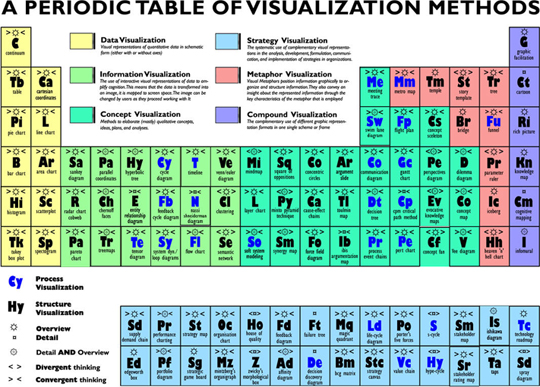
Elements in the periodic table are categorized in groups (each column) and they have simularities to each other. Elements from one group can combine with another element from another group and together they form simple molecules. Certain groups bind together because of the number of electrons they have, and how unstable they are. If one of the elements needs electrons and the other has extra electrons then the two combine to stablize each other. For example, the element sodium is from the group, sixteen, and the element chloride is from the group, seventeen. Since chlorine lacks the electrons it needs to become stable it bonds together with sodium and together they make sodium chloride (NaCl). There are many other combinations for these groups, and they all create simple molecules; depending on the element there can be different kinds of bondings, the example above was an Ionic Bond.
One of these types of bonding that can happen, between the elements, is called Ionic bonding. More specifically an ionic bond is a type of chemical bond that involves a metal and a nonmetal ion. This bond is formed by the attraction between two oppositely charged ions, that when near each other combine. The metal donates one or more electrons, forming a positively charged ion or cation with a stable electron configuration. These electrons then enter the non- metal, causing it to form a negatively charged ion or anion which also has a stable electron configuration. All in all the electrostatic attraction between the oppositely charged ions causes them to come together and form a bond. Another example of an ionic bond is, carbon dioxide, where a carbon atom and two oxygen atoms combine forming an ionic bond.

Like I said earlier there is more than one type of bond, another type of bond is called covalent bonding. A covalent bond is a form of chemical bonding that is characterized by the sharing of pairs of electrons between atoms, or between atoms and other covalent bonds. Covalent bonding occurs because the atoms in the compound have a similar tendency for electrons (generally to gain electrons). This most commonly occurs when two nonmetals bond together. Because both of the nonmetals will want to gain electrons, the elements involved will share electrons in an effort to fill their valence shells. A good example of a covalent bond is that which occurs between two hydrogen atoms. Atoms of hydrogen (H) have one valence share each other's single electron, forming one covalent bond.
Elecments and Compound, are used alot togeher, but they are two different things that I will explain. An element is an idividual electron in their first electron shell. Since the capacity of this shell is two electrons, each hydrogen atom will "want" to pick up a second electron. In an effort to pick up a second electron, hydrogen atoms will react with nearby hydrogen (H) atoms to form the compound H2. Because the hydrogen compound is a combination of equally matched atoms, the atoms will thing, that doesn’t necessarily need anything else to make it an element. It is composed of one type, or all of the same atom, and it only needs one atom to be a complete element. While a compound needs more than one element to make it a compound, it needs at least two atoms, but can combine more than that. Also, the atoms that are being combined to make this compound need to be two different types, or else it cannot be a compound. Although, these two things do have one thing in common, which is that both an element and a compound can be pure.

A chemical equation describes what happens in a chemical reaction. The equation identifies the reactants (starting materials) and products (resulting substance), the formulas of the participants, the phases of the participants (solid, liquid, gas), and the amount of each substance. Balancing a chemical equation refers to establishing the mathematical relationship between the quantity of reactants and products. This equations can show how the two different elements and how much of the elements are bonding in that situation. For example 2Mg+2S= 2MgS because, when a Mg combines with an S it makes MgS, since there are two Mg and two S that creates 2MgS. A more complicated equation would be 4Na+2O=2Na2O, what happened in this situation is that Na and O combine to make NaO. But since there are two more Na than O what happens is that it becomes 2NaO with another 2 after the Na to represent the two extra Na; so all together it becomes 2Na2O.
